If you have an employee who lives in one state but drives across the border to work in yours, you might assume you need to withhold and remit income tax to both states. In some cases, you don’t. A number of neighboring states have worked out reciprocity agreements that let cross-border employees pay income tax only to their home state, which means less paperwork for you and one less state return for them to file. Knowing which states have these agreements, and what form your employee needs to file to claim the exemption, can save both of you a lot of hassle come tax season.
| Reciprocity Definition |
|---|
| Reciprocity between states means that an employee who works in State A but lives in State B would be required to pay state income tax to State B (residence) only. When states have reciprocal agreements, each state has its own rules and paperwork governing reciprocity. In general, an employee will complete an exemption form from their state of employment, verifying that they lives in a different state. For example, an employee might work in Ohio but reside in Kentucky. Since Ohio and Kentucky have a reciprocal agreement, the employee would submit Ohio’s exemption form. That employee would pay Kentucky state income tax instead of Ohio state income tax. Online information and forms can usually be found on the state’s revenue website. |
What is tax reciprocity?
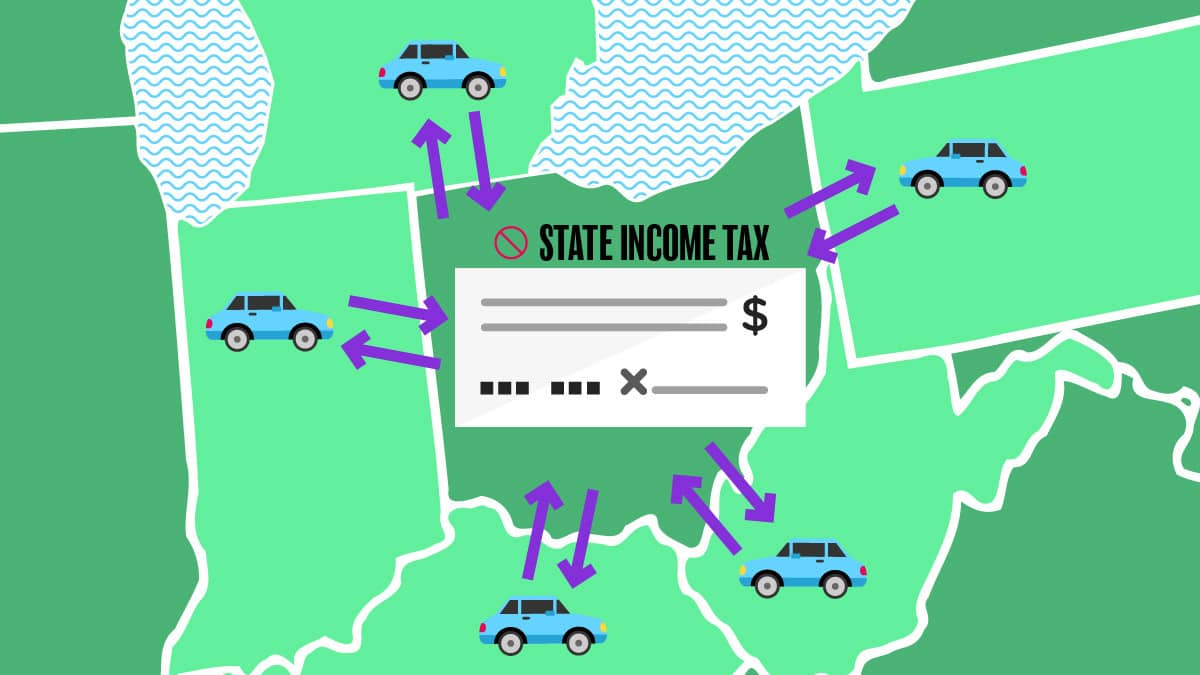
Tax reciprocity is an agreement between states that lowers the tax burden on employees who commute to work across state lines. In tax reciprocity states, employees do not have to file multiple state tax returns. If there is a reciprocal agreement between the home state and the work state, the employee is exempt from state income taxes in their employment state. Once the employee files the correct exemption certificate with their employer, they owe no income tax to the work state on those wages and don’t need to file a return there. They pay tax only to their home state.
This is different from how things work when no reciprocity agreement exists. Without reciprocity, the work state taxes the wages earned there, so the employee must file a nonresident return in that state. The employee’s home state then typically allows a credit for the tax paid to the work state, usually capped at the lesser of what was actually paid or what the home state would have charged on that income. This credit system prevents double taxation, but it doesn’t eliminate the extra filing the way a true reciprocity exemption does.
Let’s say an employee lives in Pennsylvania but works in Virginia. Pennsylvania and Virginia have a reciprocal agreement. The employee only needs to pay state income taxes for Pennsylvania, not Virginia. You withhold the taxes for the employee’s home state.
Tax reciprocity applies only to state income tax. It does not affect federal payroll taxes (Social Security, Medicare, and federal income tax withholding still apply as usual), and, it does not automatically extend to local city, county, school district, or occupational taxes either.
What about states without reciprocity taxes?
Employees don’t owe twice the taxes in non-reciprocal states. But, employees may have to do a little extra work, such as filing multiple state tax returns. Without reciprocity, the work state taxes the wages earned there, so the employee must file a nonresident return in that state. The employee’s home state then typically allows a credit for the tax paid to the work state, usually capped at the lesser of what was actually paid or what the home state would have charged on that income. This credit system prevents double taxation, but it doesn’t eliminate the extra filing the way a true reciprocity exemption does.
What is your role in state tax reciprocity?
If reciprocity applies, the employee must request it. Reciprocity isn’t automatic — the employee has to complete and submit the correct exemption or nonresidence certificate to their employer. Once the employer receives that completed form, they stop withholding tax for the work state and begin withholding for the employee’s home state instead.
At the end of the year, use Form W-2 to tell the employee how much you withheld for state income tax.
What if you withhold taxes for the work state?
One practical exception to keep in mind: even in a reciprocal relationship, if an employer withholds work-state tax, for example, the employee didn’t submit the exemption certificate in time, the employee will still need to file a nonresident return in that state just to get the mistakenly withheld tax refunded.
That’s a refund claim, not a credit: because reciprocity means no tax was legally owed to the work state in the first place. The “credit for taxes paid to another state” that non-reciprocal states use doesn’t apply here. The fix is getting that withholding back from the work state, not offsetting it with a credit on the home-state return.
When the employee does their individual tax return, they submit a tax return for each state where you withheld taxes. The employee likely receives a tax refund for the taxes paid to the work state.
Reciprocal agreements by state
Reciprocity between states does not apply everywhere. An employee must live in a state and work in a state that have a tax reciprocity agreement together. Below is the full list of states with reciprocal agreements, along with the specific nonresident/exemption certificate each employee needs to file, and a link to the current version of that form.
So, which states are reciprocal states? The following states are those where the employee works.
Arizona
- Reciprocates with: California, Indiana, Oregon, and Virginia
- Form: WEC, Employee Withholding Exemption Certificate
Washington, D.C.
- Reciprocates with: Maryland and Virginia
- Form: D-4A, Certificate of Nonresidence in the District of Columbia
- To qualify as a D.C. nonresident for this purpose, the employee must have a permanent home outside D.C. and must not live in D.C. for 183 days or more during the year.
Illinois
- Reciprocates with: Iowa, Kentucky, Michigan, and Wisconsin
- Form: IL-W-5-NR, Employee’s Statement of Nonresidence in Illinois
Indiana
- Reciprocates with: Kentucky, Michigan, Ohio, Pennsylvania, and Wisconsin
- Form: WH-47, Certificate of Residence
Iowa
- Reciprocates with: Illinois only
- Form: 44-016, Employee’s Statement of Nonresidence in Iowa
Kentucky
- Reciprocates with: Illinois, Indiana, Michigan, West Virginia, and Wisconsin, plus conditional agreements with Ohio and Virginia
- Form: 42A809, Certificate of Nonresidence
- Special conditions: The Virginia agreement only applies to Virginia residents who commute daily to work in Kentucky. The Ohio agreement excludes S corporation shareholder-employees who own 20 percent or more of the company.
Maryland
- Reciprocates with: D.C., Pennsylvania, Virginia, and West Virginia
- Form: MW507, Employee’s Maryland Withholding Exemption Certificate
Michigan
- Reciprocates with: Illinois, Indiana, Kentucky, Minnesota, Ohio, and Wisconsin
- Form: MI-W4, Employee’s Michigan Withholding Exemption Certificate
Minnesota
- Reciprocates with: Michigan and North Dakota
- Form: MWR, Reciprocity Exemption/Affidavit of Residency
- To qualify, the employee must maintain a permanent home in Michigan or North Dakota and return there at least once a month. Form MWR must be refiled with the employer every year to keep the exemption in place.
Montana
- Reciprocates with: North Dakota
- Form: MW-4, Montana Employee’s Withholding Allowance and Exemption Certificate
New Jersey
- Reciprocates with: Pennsylvania only
- Form: NJ-165, Employee’s Certificate of Non-Residence in New Jersey
North Dakota
- Reciprocates with: Minnesota and Montana
- Form: NDW-R, Reciprocity Exemption from Withholding for Qualifying Minnesota and Montana Residents
Ohio
- Reciprocates with: Indiana, Kentucky, Michigan, Pennsylvania, and West Virginia
- Form: IT 4NR, Employee’s Statement of Residency in a Reciprocity State
Pennsylvania
- Reciprocates with: Indiana, Maryland, New Jersey, Ohio, Virginia, and West Virginia
- Form: REV-419, Employee’s Nonwithholding Application Certificate
Virginia
- Reciprocates with: D.C., Kentucky, Maryland, Pennsylvania, and West Virginia
- Form: VA-4, Employee’s Virginia Income Tax Withholding Exemption Certificate
West Virginia
- Reciprocates with: Kentucky, Maryland, Ohio, Pennsylvania, and Virginia
- Form: WV/IT-104NR, West Virginia Certificate of Nonresidence (this links to West Virginia’s withholding forms page — the direct PDF link changes periodically, so the page always has the current version)
Wisconsin
Form: W-220, Nonresident Employee’s Withholding Reciprocity Declaration
Reciprocates with: Illinois, Indiana, Kentucky, and Michigan
List of states with reciprocal agreements
Use our chart to learn which states have reciprocal agreements. And, find out what form the employee must fill out to request you withhold from their home state:
| Where the Employee Works | Where the Employee Lives | Form Employee Fills Out |
| Arizona | California, Indiana, Oregon, Virginia | Arizona Form WEC |
| D.C. | Virginia, Maryland, All qualified non-residents | Form D-4A |
| Illinois | Iowa, Kentucky, Michigan, Wisconsin | Form IL-W-5-NR |
| Indiana | Kentucky, Michigan, Ohio, Pennsylvania, and Wisconsin | Form WH-47 |
| Iowa | Illinois | Form IA 44-016 |
| Kentucky | Illinois, Indiana, Michigan, West Virginia, Wisconsin Virginia, Ohio (with conditions) | Form 42A809 |
| Maryland | D.C., Pennsylvania, Virginia, West Virginia | Form MW507 |
| Michigan | Illinois, Indiana, Kentucky, Minnesota, Ohio, Wisconsin | Form MI-W4 |
| Minnesota | Michigan, North Dakota | Form MWR |
| Montana | North Dakota | Form MW-4 |
| New Jersey | Pennsylvania | Form NJ-165 |
| North Dakota | Minnesota, Montana | Form NDW-R |
| Ohio | Indiana, Kentucky, West Virginia, Michigan, Pennsylvania | Form IT 4NR |
| Pennsylvania | Indiana, Maryland, New Jersey, Ohio, Virginia, West Virginia | Form REV-419 EX |
| Virginia | D.C., Kentucky, Maryland, Pennsylvania, West Virginia | Form VA-4 |
| West Virginia | Kentucky, Maryland, Ohio, Pennsylvania, Virginia | Pg 2. of Form WV IT-104NR |
| Wisconsin | Illinois, Indiana, Kentucky, Michigan | Form W-220 |
Although states not listed do not have tax reciprocity, many have an agreement in the form of credits. Again, a credit agreement means that the employee’s home state provides them a tax credit for paying state income tax to their working state.
Whether you have one, five, or 50 employees, calculating taxes can get complicated. Let Patriot Software worry about the taxes so you can get back to business. Patriot’s online payroll lets you run payroll in three easy steps, accurately calculating the tax amounts for you. Get your free trial now!
This article has been updated from its original publication date of January 6, 2017.
This is not intended as legal advice; for more information, please click here.