
Our survey of 1,000 Americans who applied for jobs in the past year across multiple industries shows that pay transparency is no longer a nice-to-have. It has become a deciding factor in whether candidates trust an employer enough to engage at all.
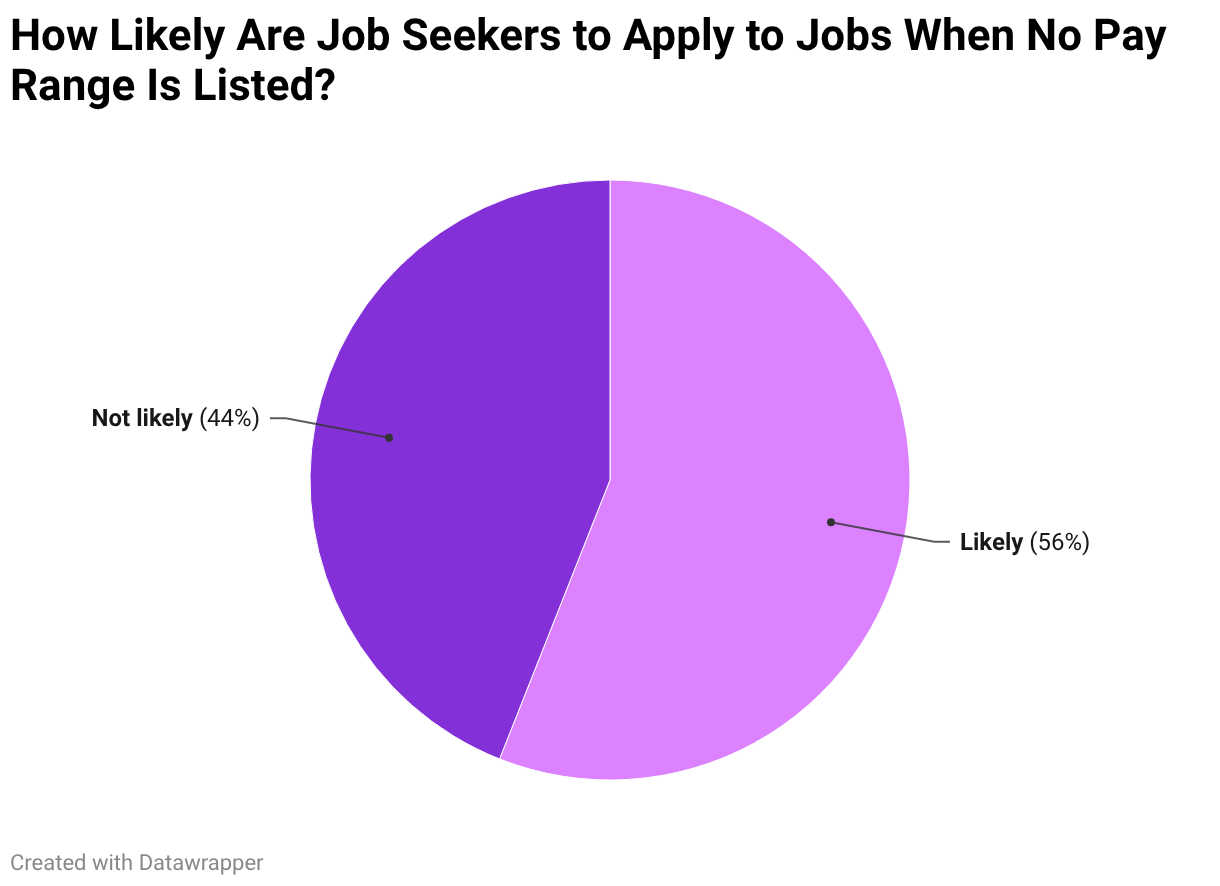
The clearest signal is hard to ignore. 44% say they are unlikely to apply for a job that does not list a pay range. For many job seekers, silence around pay no longer seems flexible.
In a job market affected by layoffs, role consolidation, and longer hiring cycles, applicants are becoming more selective about where they invest their time.
Expectations around pay transparency are also shifting alongside regulation. In recent years, a growing number of states have introduced laws requiring pay transparency, where employers must disclose salary information in job postings. While this study focuses on how job seekers experience transparency in practice, the legal backdrop has helped normalize the idea that pay information should be available upfront.
Key findings
- 44% are unlikely to apply to a job posting without a listed pay range
- 45% say not listing pay is disrespectful to applicants
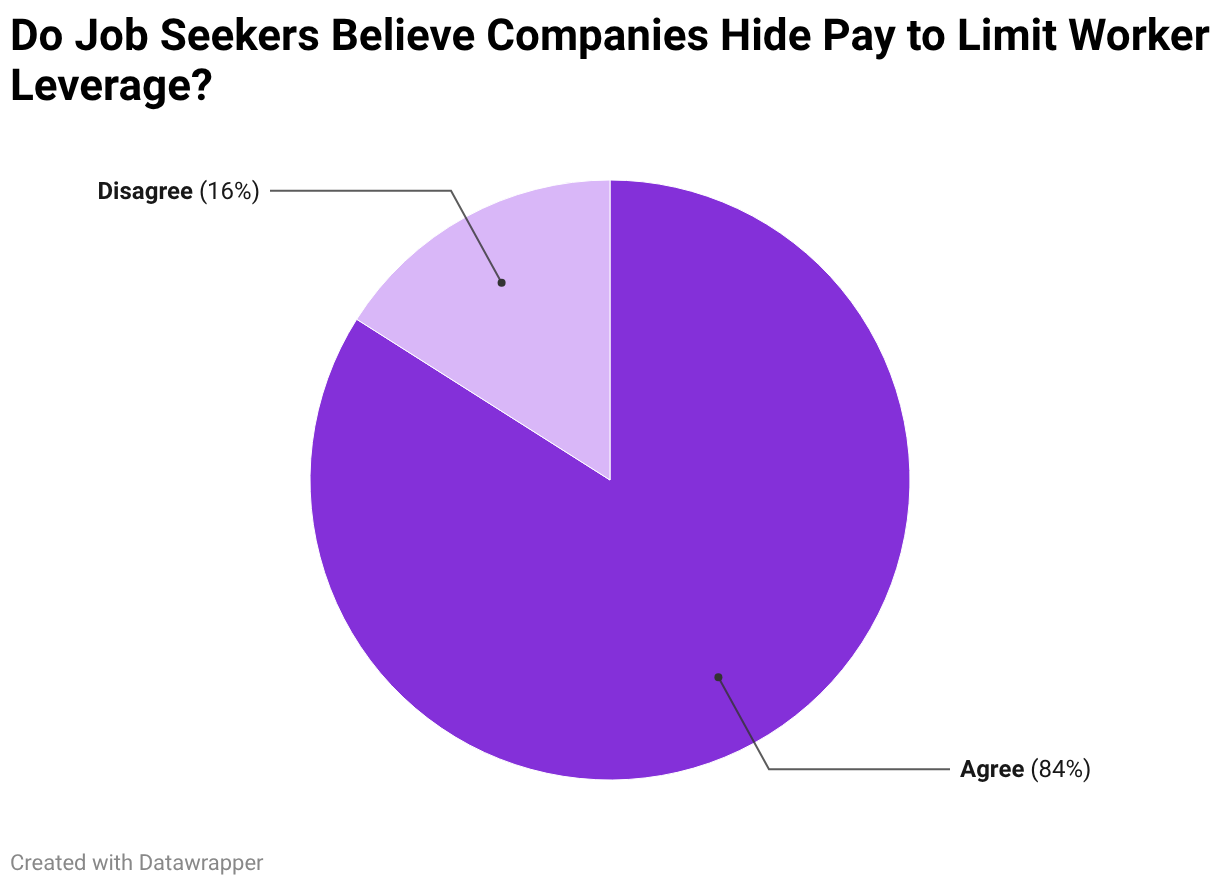
- 84% believe companies hide pay to reduce workers’ negotiating power
- 90% say pay transparency affects whether they feel valued as a worker
- 44% believe employers who reveal pay upfront are more honest than average
- 17% received an offer below the posted range when pay was disclosed
- 35% of earners making $150,000+ suspect that delayed pay disclosure is used to underpay based on who is asking
Pay transparency has become an application filter
For years, employers framed salary opacity as a way to keep options open. Job seekers increasingly see it as a reason to walk away.
Nearly half of respondents say they will not apply if a pay range is missing. Transparency is no longer limited to late-stage pay discussions. It now determines who enters the hiring funnel.
This behavior aligns with prior academic research on hiring, which found that clear pay information increases application intent by shaping perceptions of fairness and employer credibility.
Many applicants are managing multiple applications at once while balancing work, family, and financial pressure. A missing pay range introduces uncertainty early, forcing candidates to gamble time and energy with no clear payoff.
In effect, salary ranges now act as a sorting mechanism. Employers who stay vague reduce their applicant pool before interviews begin, often without realizing it.
When pay is hidden, candidates take it personally
The emotional response to missing pay information is striking. Forty-five percent describe non-disclosure as disrespectful.
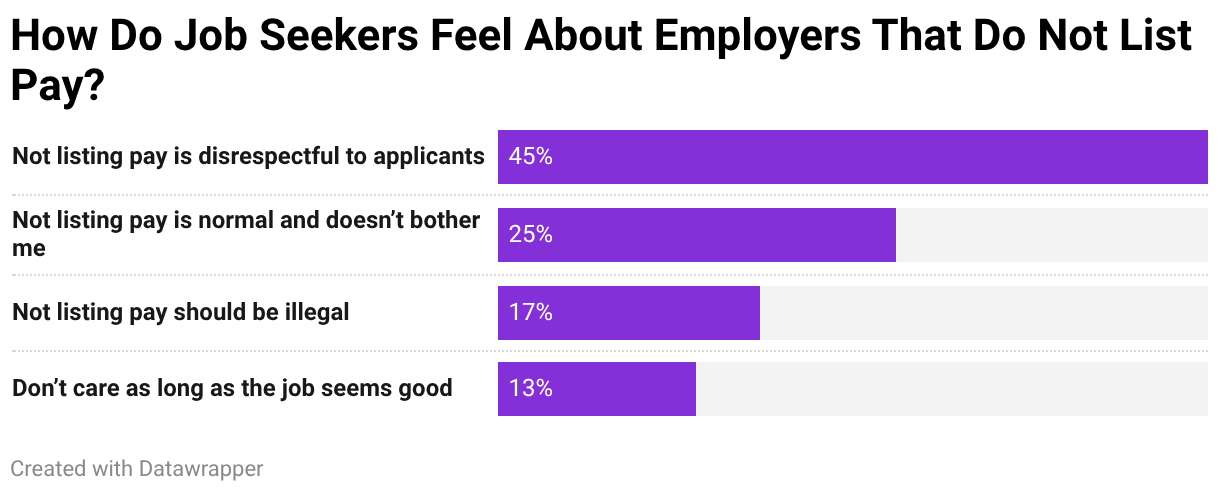
That reaction reflects a broader shift in how candidates view the hiring relationship. Job seekers increasingly expect mutual transparency. When employers withhold pay while asking applicants to share expectations, experience, and availability, the imbalance feels outdated.
This helps explain why 90% of respondents say transparency affects whether they feel valued as a worker. Compensation clarity is no longer separate from culture. For many candidates, it serves as the first signal of how they will be treated once hired.
Visible pay builds early trust
Posting a pay range does more than set expectations. It shapes perception. Forty-four percent of respondents believe employers who list pay upfront are more honest than the average employer. Transparency does not just answer a practical question. It establishes credibility before any recruiter outreach or interview takes place.

In a job market filled with polished descriptions and broad claims, candidates are learning to read between the lines. Hidden pay, vague responsibilities, and unclear language can signal that key details are being withheld. When an employer is clear about compensation, it often creates the opposite impression. If pay is handled openly, other areas may be handled the same way.
That perceived honesty has become a competitive advantage in an often crowded hiring market.
Candidates are aware of power imbalances
Job seekers are not guessing at employer motives. They are watching patterns.
A striking 84% believe companies hide pay to limit workers’ ability to negotiate. For many, non-disclosure no longer feels accidental. It feels intentional.
Among higher earners, skepticism runs deeper. Thirty-five percent of respondents making $150,000 or more believe that delayed pay disclosure is used to offer lower compensation depending on the candidate. With experience comes familiarity with negotiation tactics and internal pay structures.
At senior levels, compensation decisions typically involve documented ranges, approvals, and reporting. For experienced candidates, clarity is expected, not just preferred.
Transparency without follow-through erodes trust
Posting a pay range does not automatically build confidence if reality falls short. Seventeen percent of those offered a job where a range was listed say the final offer came in below that range. That gap matters because it turns transparency into disappointment.
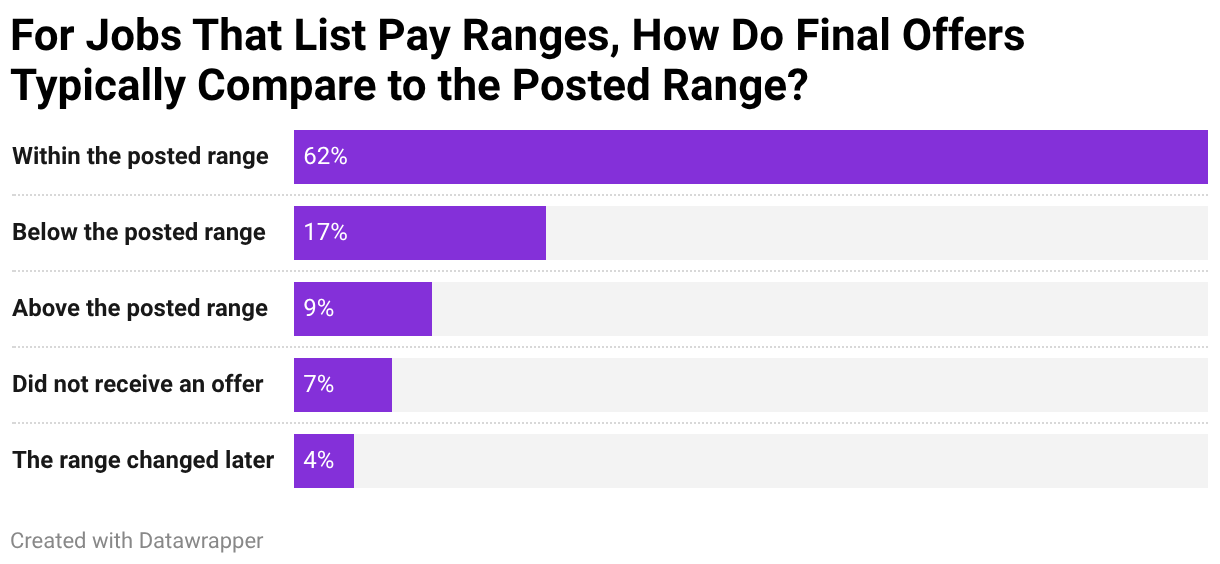
For candidates, a posted range creates an implied promise. When the final number lands outside it, credibility suffers more than it would have if no range had been shared at all. Once compensation is finalized, those decisions move through payroll systems, where ranges and adjustments become permanent records rather than flexible talking points.
Transparency only works when it holds from posting to offer.
Gen Z wants to understand how pay works
Younger workers are not just asking for numbers. They want context.
Among Gen Z respondents, 42% say the single transparency practice most likely to increase their likelihood of applying and accepting an offer is a clear explanation of how pay is set.
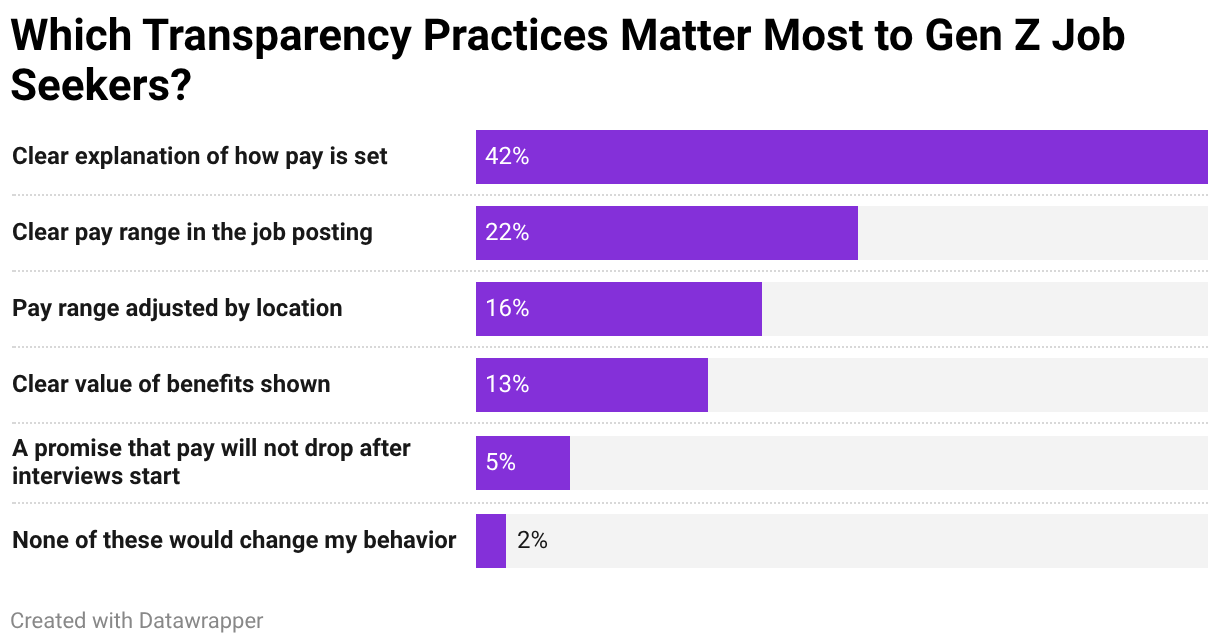
This points to a shift in expectations. The next generation of workers is less satisfied with static ranges and more interested in understanding progression, criteria, and fairness. They want to know how experience, performance, and growth factor into compensation over time.
For this generation, clarity around pay logic is becoming as important as the pay itself.
Summary
Pay transparency is no longer a debate. It is a behavior with immediate consequences.
Job seekers are using salary visibility to assess trust, respect, and fairness before they ever speak to a recruiter. When pay is hidden, many opt out. When it is visible and consistent, trust follows. When it is visible but broken, trust collapses.
The clearest insight from the findings is also the simplest. Clear ranges, honest follow-through, and straightforward explanations of how pay is determined are quickly becoming the baseline.
Methodology
This survey captures responses from U.S. adults who applied for at least one job in the past 12 months. Participants answered questions about job postings, pay disclosure, interview experiences, and how compensation transparency influenced their decisions. Results were analyzed across income and age groups to identify patterns in job-seeking behavior and perception.
Fair use policy
Users are welcome to utilize the insights and findings from this study for noncommercial purposes, such as academic research, educational presentations, and personal reference. When referencing or citing this article, please ensure proper attribution to maintain the integrity of the research. Direct linking to this article is permissible, and access to the original source of information is encouraged.
For commercial use or publication purposes, including but not limited to media outlets, websites, and promotional materials, please contact the authors for permission and licensing details. We appreciate your respect for intellectual property rights and adherence to ethical citation practices. Thank you for your interest in our research.
This is not intended as legal advice; for more information, please click here.